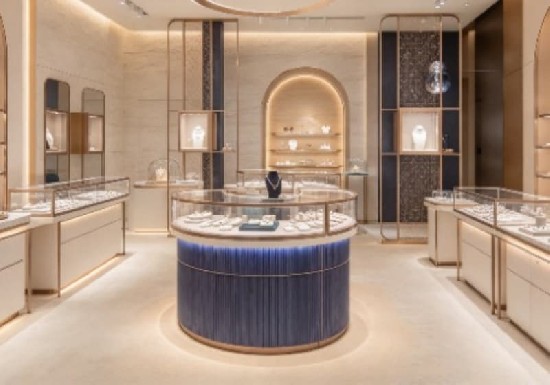
Key Parameters:
1.High-End Luxury Aesthetics & Material Selection
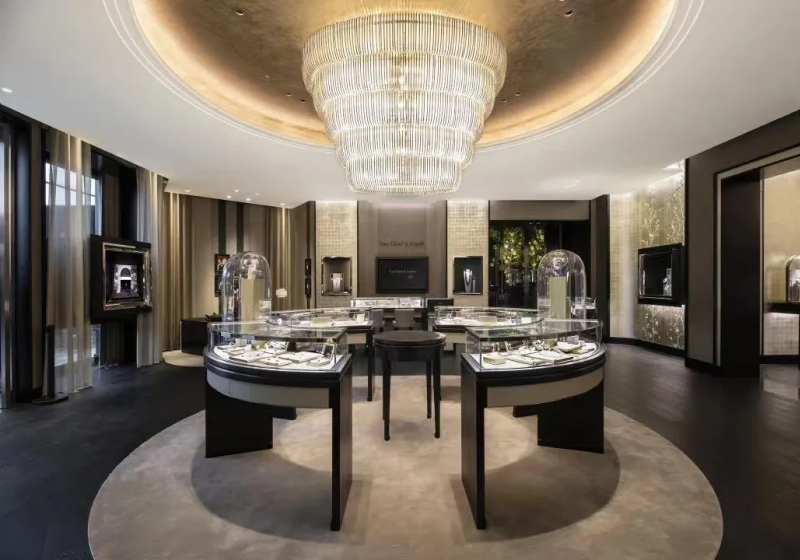
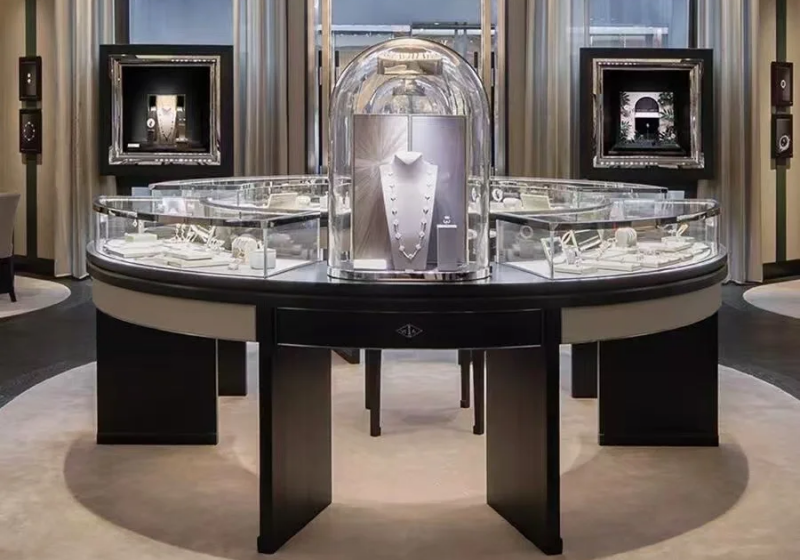
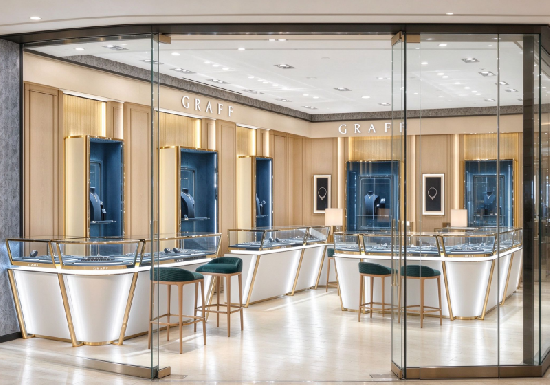
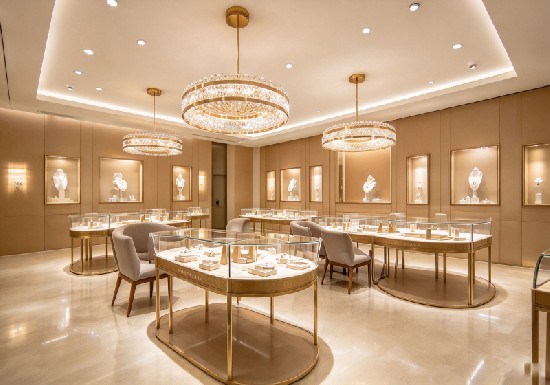
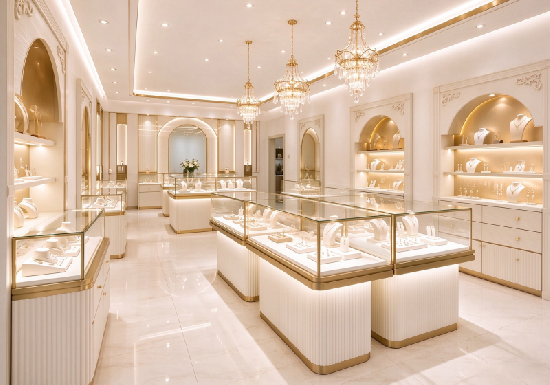
• Color Palette: Dominated by deep charcoal/black, warm gold accents, and soft beige/ivory tones, creating a sophisticated, high-end visual hierarchy.
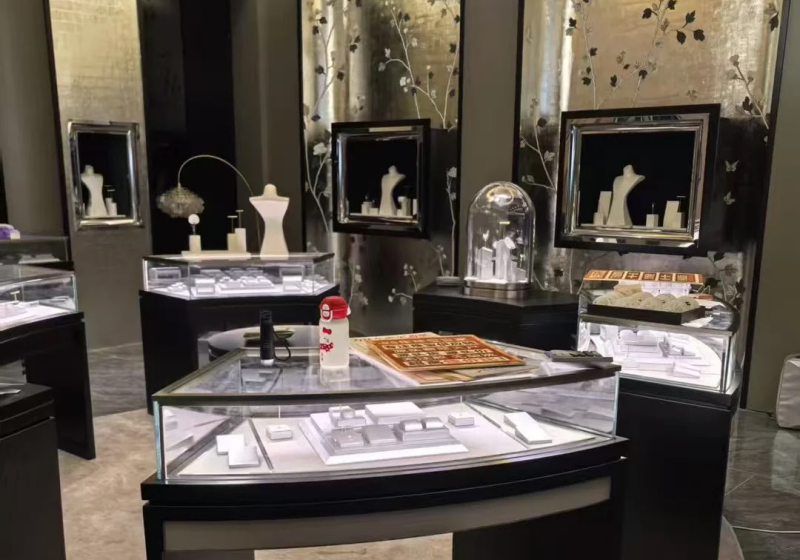
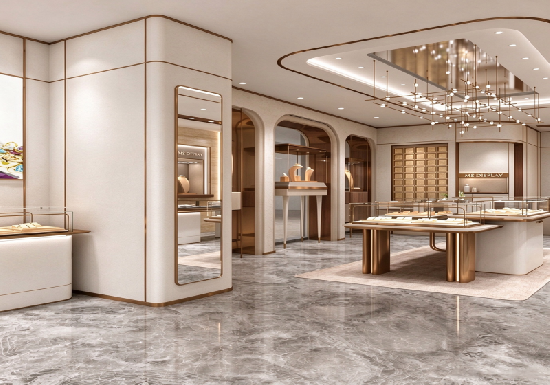
• Materials: Premium wood veneers (with subtle grain textures), brushed metal trims (gold/brass), tempered clear glass, and polished stone/ceramic flooring, emphasizing durability and luxury.
• Finish Details: Matte and semi-gloss surfaces are combined to reduce glare while highlighting texture; gold edging on cabinet bases and wall panels adds a refined, exclusive touch.
2. Display Cabinet Form & Functionality
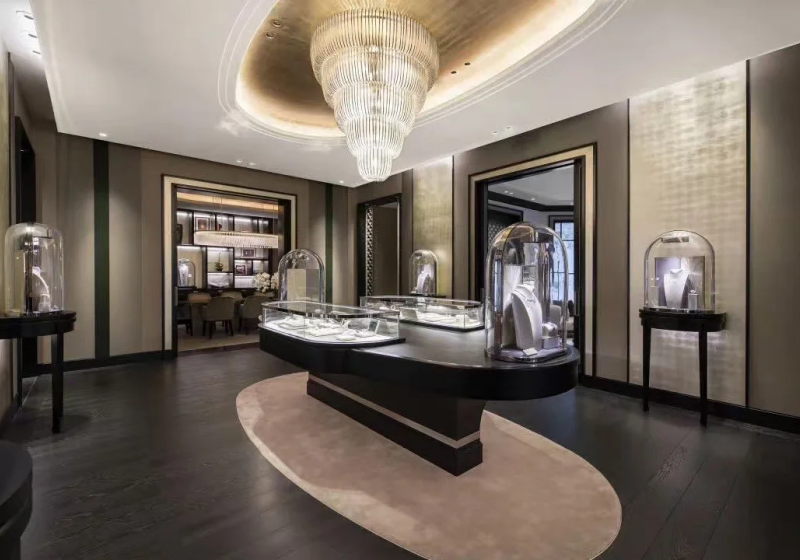
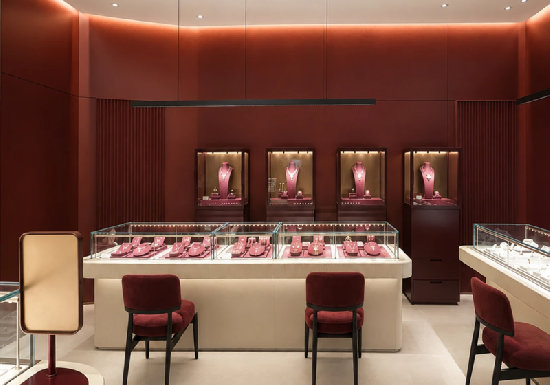
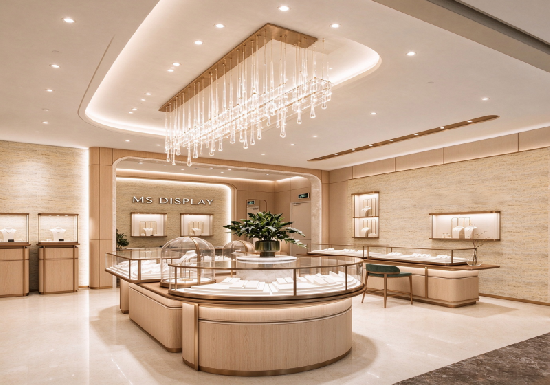
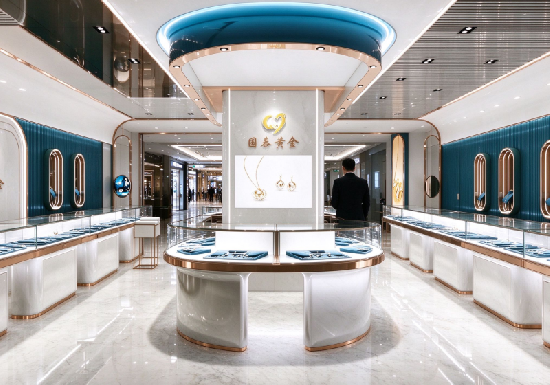
• Modular Shapes: Includes octagonal freestanding islands, curved peninsula counters, and wall-mounted vitrines, adapting to different spatial layouts and customer flow.
• Glass Enclosures: Low-profile, frameless or thin-framed glass display tops maximize visibility of jewelry while maintaining a clean, minimalist look.
• Storage Integration: Hidden drawer units and under-counter storage keep the sales area uncluttered, with seamless integration into the cabinet structure.
3. Lighting Design for Product Highlighting
• Ambient Lighting: Recessed linear LED strips and layered ceiling fixtures (e.g., tiered crystal chandeliers) provide soft, even ambient light to set the luxury mood.
• Accent Lighting: Directional spotlights and backlighting for wall displays create focal points on key pieces, enhancing the brilliance of gemstones and watches.
• Glare Control: Diffused light sources and anti-reflective glass minimize reflections, ensuring clear product visibility without eye strain for customers.
4. Spatial Layout & Customer Experience
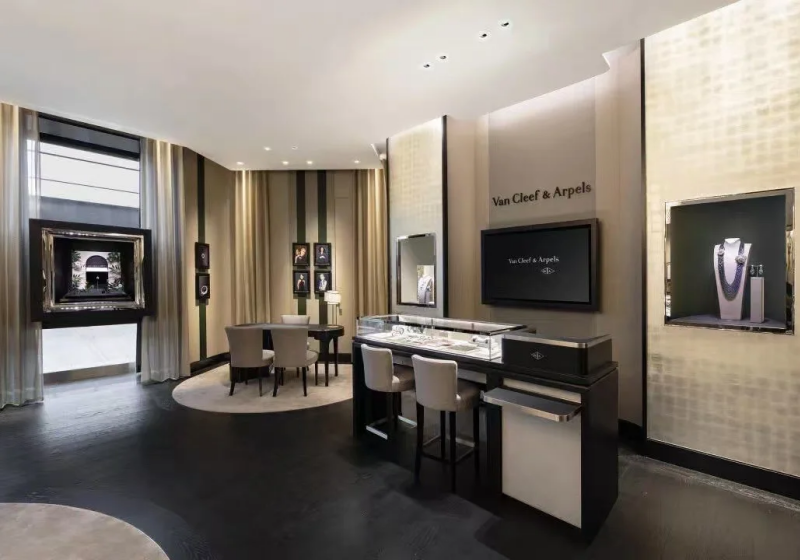
• Zoning: Clear separation between public display zones (central islands), consultation areas (seated counters), and private viewing rooms, balancing openness and exclusivity.
• Flow Optimization: Wide pathways between cabinets ensure comfortable movement, while circular/oval rug bases define display zones and guide customer traffic.
• Interactive Elements: Integrated digital screens (e.g., brand storytelling displays) and mirrored walls add depth and engagement without disrupting the elegant aesthetic.
5. Brand Identity Integration
• Subtle Branding: Laser-cut or embossed brand logos (e.g., "Van Cleef & Arpels") on wall panels and cabinetry, avoiding overt advertising while reinforcing brand recognition.
• Consistent Visual Language: Uniform use of gold trim, dark wood, and glass across all display elements creates a cohesive brand experience.
• Artistic Displays: Dome-shaped glass cloches for high-value pieces and curated wall-mounted jewelry presentations elevate the product to art objects.